


5 Benefits of Cutting Sugar and Processed Foods in the evening for Better Sleep and Energy

A lot of people blame poor sleep or low morning energy on stress, screens, or a busy schedule. Those things matter, but the food eaten late in the day can quietly shape the whole night.
A sugary snack after dinner or a bowl of ultra-processed cereal before bed may feel harmless in the moment. For some people, though, that late sugar hit can raise blood sugar, trigger a bigger insulin response, make digestion work harder, and leave the body less settled when it should be winding down.
Cutting back on added sugar during the day and removing processed foods in the evening is not about eating perfectly. It is about giving the body a calmer finish to the day. That can support steadier blood sugar, better sleep, more consistent energy the next morning, and less repeated demand on the pancreas.
This article is for general education only. If you have diabetes, prediabetes, hypoglycemia, a history of disordered eating, or take medication that affects blood sugar, talk with a qualified health professional before making major diet changes.
1. Your blood sugar has fewer sharp spikes at night
Blood sugar naturally rises after eating carbohydrates. That is normal. The body breaks carbs into glucose, which moves into the bloodstream. The pancreas responds by releasing insulin, a hormone that helps move glucose from the blood into cells.
The issue is not one single food or one single meal. The bigger problem is the pattern of frequent large spikes, especially from added sugars and highly processed foods that digest quickly.
Processed foods often combine several things that make blood sugar rise fast:
Refined flour
Added sugar
Low fiber
Low protein
High palatability, which makes overeating easier
Examples include cookies, candy, sweetened yogurt, chips, crackers, pastries, boxed snack cakes, cereal, frozen pizza, french fries, alcohol and many packaged desserts.
These foods can move through digestion quickly and send glucose into the blood faster than a balanced meal. When that happens at night, the body has to manage a bigger glucose load during the hours when it should be preparing for rest.
A calmer evening meal usually looks different. It includes protein, fiber, healthy fat, and slower-digesting carbohydrates and much smaller portions in the evening. This slows digestion and will help glucose enter the bloodstream more gradually. Foods to limit or avoid at your evening meal include:
Bread
Pasta
Rice
Potatoes
Corn
Most cereals
Sugary foods and drinks
Good evening choices might include:
Eggs with sautéed vegetables
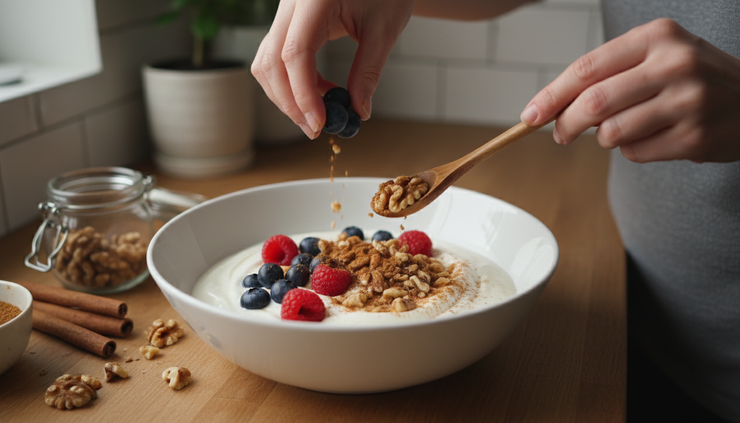
Kefir or Greek yogurt with a couple of berries and chia seeds
Chicken with greens and fermented vegetables
Turkey lettuce wraps with avocado
Cottage cheese with cinnamon and walnuts on top of steamed vegetables.
Tofu stir-fry with vegetables
Sardines and Wild Caught Fish
Cruciferous vegetables
This does not mean all carbohydrates are bad at night. The key difference is how fast they digest in your system and what they come packaged with naturally, such as fiber, water, minerals, and plant compounds.
When blood sugar rises more slowly, the body has an easier job. That can reduce the roller-coaster feeling of being wired after a snack, then tired or hungry again later.
2. Your pancreas does not have to work as hard
The pancreas plays a major role in blood sugar control. When glucose rises, beta cells in the pancreas release insulin. Insulin acts like a signal that tells muscle, liver, and fat cells to take up or store glucose.
A high-sugar evening routine asks the pancreas to respond again and again. Dessert after dinner, sweetened drinks, late chips, candy, or refined carbs will create extra demand.
That does not mean the pancreas is “weak” or that insulin is bad. Insulin is essential. The concern is that frequent heavy demand can make the system work harder than it needs to, especially for people already dealing with insulin resistance, pre-diabetes or weight gain around the midsection.
Think of it like turning down the volume on a loud room. When evening meals are built around whole foods, the pancreas still does its job, but it may not need to respond to the same sharp glucose surges.
A lower-sugar evening can support the pancreas in a few ways:
Smaller glucose spikes may call for a smaller insulin response.
More fiber can slow the release of glucose into the bloodstream.
Protein and fat can increase fullness and reduce late snacking.
Fewer processed foods can reduce the chance of eating past hunger.
Less strain does not mean no work. The pancreas is always involved in digestion and blood sugar balance. The goal is to reduce unnecessary spikes caused by foods that are easy to overeat and quick to digest.
3. Sleep may become deeper and more steady
Food affects sleep through several paths. Blood sugar changes are one of them, but digestion, body temperature, hormones, and reflux can also play a role.
A heavy, sugary, or processed meal close to bedtime can leave the body busy when it should be slowing down. Some people notice they feel hot, restless, thirsty, or uncomfortable after eating sweets or processed snacks late at night. Others fall asleep quickly but wake up in the middle of the night.
One possible reason is a blood sugar swing. After a large spike, blood sugar may drop later. The body can respond by releasing stress hormones that help bring glucose back up. For some people, that can contribute to nighttime waking or light sleep.
Late processed foods can also affect sleep because they are often salty, fatty, and easy to overeat. That can cause:
More thirst during the night
Indigestion or reflux
A heavier feeling in the stomach
More trips to the bathroom if paired with sugary drinks
Less comfort lying down
A better evening pattern is simple. Eat a satisfying smaller portioned dinner, then give the body enough time to digest before bed. Try for at least 12 hours before your first meal. Many people do well finishing meals a 4-5 hours before sleep, though the right timing varies.
If hunger shows up later, a small whole-food snack is usually a better choice than a processed dessert. Try something that combines protein or fat with fiber.
Good options include:
Apple slices with almond butter
A boiled egg and cucumber slices
Plain yogurt with berries
A small handful of nuts
Hummus with celery or jicama
These foods are not magic sleep aids. They simply give the body steadier fuel and less digestive disruption than a sugary packaged snack.
Better sleep often starts before the bedroom. A calmer blood sugar curve in the evening can make it easier for the nervous system to shift into rest.
4. Next-day energy can feel more stable
Morning energy starts the night before. When sleep is broken, digestion is heavy, or blood sugar swings overnight, the next day can begin with fatigue before anything even happens.
Cutting back on sugar and removing evening processed foods can help energy in two main ways.
The first is through better sleep quality. Even small improvements in sleep can affect alertness, mood, cravings, and motivation the next day. A more settled body at night often wakes up with less fog.
The second is through steadier blood sugar. When the previous night included a large amount of sugar or refined carbs, some people wake up hungry, sluggish, puffy, or craving more sugar. That can set up a cycle:
Late sugar or processed snack
Poor or restless sleep
Sugary breakfast or extra caffeine
Afternoon crash
Quick energy, then possible blood sugar swing
Lower morning motivation and alertness
Another quick lift followed by another dip
More cravings later in the day
Breaking that cycle does not require a strict diet. A more steady evening often leads to a more steady morning.
Stable energy is not about never feeling tired. It is about fewer dramatic highs and lows. Reducing evening sugar is one practical way to support that.

5. Cravings can calm down because the evening cue gets weaker
Evening snacking is not always about hunger. Often, it is a cue. The day ends, the couch becomes the signal, the show starts, and the brain expects something sweet, salty, crunchy, or creamy.
Processed foods are designed to be rewarding. They often combine sugar, salt, fat, and refined starch in a way that makes stopping difficult. That is why “just one” cookie, chip, or candy can turn into a much larger portion.
When this happens night after night, the body and brain learn the pattern. The craving can show up even after a full dinner.
Removing processed foods in the evening helps weaken that cue. At first, it may feel uncomfortable. The brain expects the usual reward. After a while, the cue often softens, especially if the replacement routine still feels satisfying.
The goal is not to sit with a craving and feel deprived. It helps to build a new evening pattern that gives some comfort without the sugar spike.
Try one of these swaps:
Herbal tea with a protein-rich snack
Sparkling water with citrus instead of soda
Greek yogurt with berries instead of ice cream
Air-popped popcorn instead of chips
A warm shower instead of grazing in the kitchen
Reading, stretching, or walking after dinner
A short walk after dinner can be especially helpful for many people. Light movement after meals may help muscles use some of the glucose from the bloodstream. It also creates a clear break between dinner and the rest of the night.
Cravings also tend to improve when dinner is satisfying enough. A tiny, low-calorie dinner can backfire if it leads to intense hunger at 9:30 p.m. Build dinner with enough protein, fiber-rich plants, and satisfying fat.
A complete plate might look like this:
One palm-sized portion of protein
One or two fist-sized portions of vegetables
1/2 serving of whole grains
One small portion of olive oil, avocado, nuts, or seeds
This type of meal gives the body real fuel, which makes it easier to say no to the highly processed snack later.
How to start without making it complicated
Trying to change everything at once usually makes the process harder. A simple plan works better.
Start with the evening. Keep breakfast and lunch mostly normal for the first week if that helps. Make one clear rule for the last part of the day: Your evening meal should be smaller with:
No processed sweets, refined snack foods, or sugary drinks after dinner.
Then make the better choice easy to reach. Stock the kitchen with foods that support your goal.
It also helps to remove the most tempting evening foods from the house for a while. Willpower is harder at night when people are tired. A better environment reduces the number of decisions.
If dessert is part of family life, set a simple boundary. For example, enjoy a planned dessert earlier in the day or choose a less processed option after dinner, such as fruit with yogurt. The point is to reduce the nightly processed-food habit, not create fear around food.
What changes are realistic to expect
Some people notice better sleep and fewer cravings within a few days. Others need a few weeks. The response depends on the person, their starting diet, activity level, stress, sleep schedule, and health conditions.
Common early changes may include:
Less bloating before bed
Fewer late-night cravings
More stable morning appetite
Less of an afternoon energy crash
Better awareness of true hunger
There can also be a short adjustment period. If the body is used to a lot of added sugar at night, cravings may feel stronger at first. That does not mean the change is failing. It means the habit loop is being interrupted.
A steady approach matters more than perfection. One sweet snack does not ruin progress. The bigger win is changing the default evening routine.

The takeaway
Cutting sugar and avoiding processed foods in the evening can give the body a quieter night. Blood sugar may rise and fall more gently. The pancreas may face fewer large insulin demands. Sleep can become more steady. Morning energy may feel less forced. Cravings can lose some of their pull.
The simplest place to begin is dinner and the hours after it. Build a satisfying whole-food meal, keep sugary processed snacks out of the evening routine, and choose a small protein-and-fiber snack if hunger shows up later.
Better blood sugar, sleep, and energy rarely come from one dramatic change. They come from repeatable choices that make the body’s job easier every night.
In Health and Wellness,
Cynthia


Comments